
Air Conditioner Rebate Victoria 2026: Complete Homeowner Guide
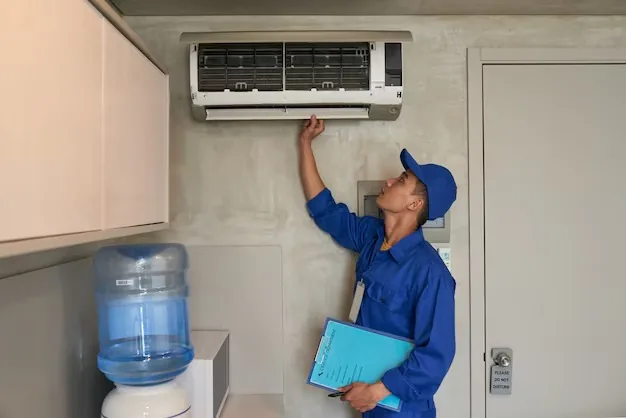
The Victorian air conditioner rebate is real, ongoing and applied as an upfront discount — but the rules change on 30 September 2026. Here's how much you can save, who qualifies and what to do before you book an installer.
Key Takeaways
If you're a Victorian homeowner thinking about upgrading your heating and cooling system in 2026, you've likely heard about government rebates on air conditioners. The good news: the incentive is real, ongoing, and can significantly reduce your upfront installation cost. The less-known part: the rules are changing later this year, and how much you save depends heavily on what system you're replacing.
This guide breaks down exactly how the air conditioner rebate Victoria 2026 works, who qualifies, and what's changing so you can make an informed decision before you book an installer.
What is the Victorian air conditioner rebate?
The rebate isn't a cheque in the mail; it's an upfront discount delivered through the Victorian Energy Upgrades (VEU) program, run by the Victorian Government and administered by the Essential Services Commission.
- When an accredited provider installs an approved high-efficiency reverse-cycle air conditioner, the installation generates Victorian Energy Efficiency Certificates (VEECs).
- The provider sells these certificates to energy retailers, and that value is passed directly back to you as a discount at the point of installation.
- There's no claim form, no waiting period, and no government portal to navigate — it's an ongoing programme that reduces the cost of upgrading your heating and cooling system on the day of installation.
- The Victorian Energy Upgrades program is legislated under the Victorian Energy Efficiency Target Act 2007, which came into effect on 1 January 2009, and reverse-cycle air conditioners fall under the scheme's official heating and cooling activity.
How much can you save?
This is where it gets specific; the rebate amount depends on what you're replacing, not just what you're buying.
- The rebate is calculated on how much energy the upgrade saves rather than on what you buy.
- Replacing a whole-home ducted gas heating system with a reverse-cycle system attracts the largest rebate, because the energy saving is the biggest.
- Replacing a smaller gas space heater or an old inefficient AC unit still qualifies, but generates fewer certificates and a smaller discount — the Victorian Government's official heating and cooling page notes that households can receive a discount of up to $1,610 and save up to $460 on energy bills each year when replacing a non-ducted gas space heater with an efficient reverse cycle air conditioner.
- Discount size also moves with the market — VEECs have been trading at roughly $85 per certificate in early-to-mid 2026, down from peaks of over $110 in late 2024, so quoted rebate figures can shift over time.
Because of this variability, the only reliable way to know your exact figure is a home assessment from an accredited provider — this is why checking eligibility first matters more than chasing a headline number.
Who qualifies?
Most Victorian homeowners are eligible, but there are conditions to be aware of:
- Your property must be located in Victoria and generally at least 2 years old
- You must be replacing an existing heating/cooling system that is also at least 2 years old
- The installation must be completed by a VEU-accredited provider; self-installs or non-accredited tradespeople don't qualify
- The provider must supply and install the unit as part of the same job
- You generally can't claim a VEU heating or cooling upgrade on the same property if one has been claimed within the last 2 years
- There is no income test for this program
What's changing from 30 September 2026
If you're planning an upgrade, timing matters. A confirmed rule change affects larger systems:
- From 30 September 2026, the minimum co-payment for ducted systems and multi-head splits of 10kW or more rises from $1,000 to $3,000 (inc. GST)
- An incentive cap will also apply to large multi-split systems
- Systems under 10kW keep the existing $1,000 minimum, and small non-ducted units keep the $200 minimum
- Since 31 March 2025, all systems installed under the VEU program must carry a minimum 5-year warranty against defects
If you're considering a larger ducted or multi-split system, locking in your assessment and quote before this date could mean a meaningfully lower co-payment.
How to claim the rebate
The process is straightforward when you work with an accredited installer:
- Book a free home assessment — your provider checks your existing system, property eligibility, and rebate potential
- Receive an itemised quote showing the rebate already applied, not as a separate reimbursement
- The provider handles the VEEC paperwork — you don't deal with certificates or retailers directly
- Installation completed by licensed, in-house technicians
- System tested and signed off, with warranty documentation provided
Why work with an accredited provider
Not every installer can legally process this rebate. Using a VEU-accredited, licensed provider ensures:
- Correct certificate generation and paperwork handling
- Compliance with the new 5-year warranty and co-payment rules
- No risk of disqualification due to non-accredited installation
- A single point of contact from assessment through to sign-off
Final thoughts
The Victoria air conditioner rebate in 2026 remains a genuine opportunity to reduce the cost of upgrading to an energy-efficient reverse-cycle system — but the savings amount depends on your existing system, current VEEC pricing, and system size. With co-payment changes locking in from 30 September 2026, now is a smart time to get assessed.
Ready to find out how much you could save? Go Green Australia is a VEU-approved installer helping Melbourne homeowners access available rebates, manage the paperwork, and install energy-efficient systems from assessment through to completion.